_________________________________
By Patricia Kristjanson and Julie Mollins
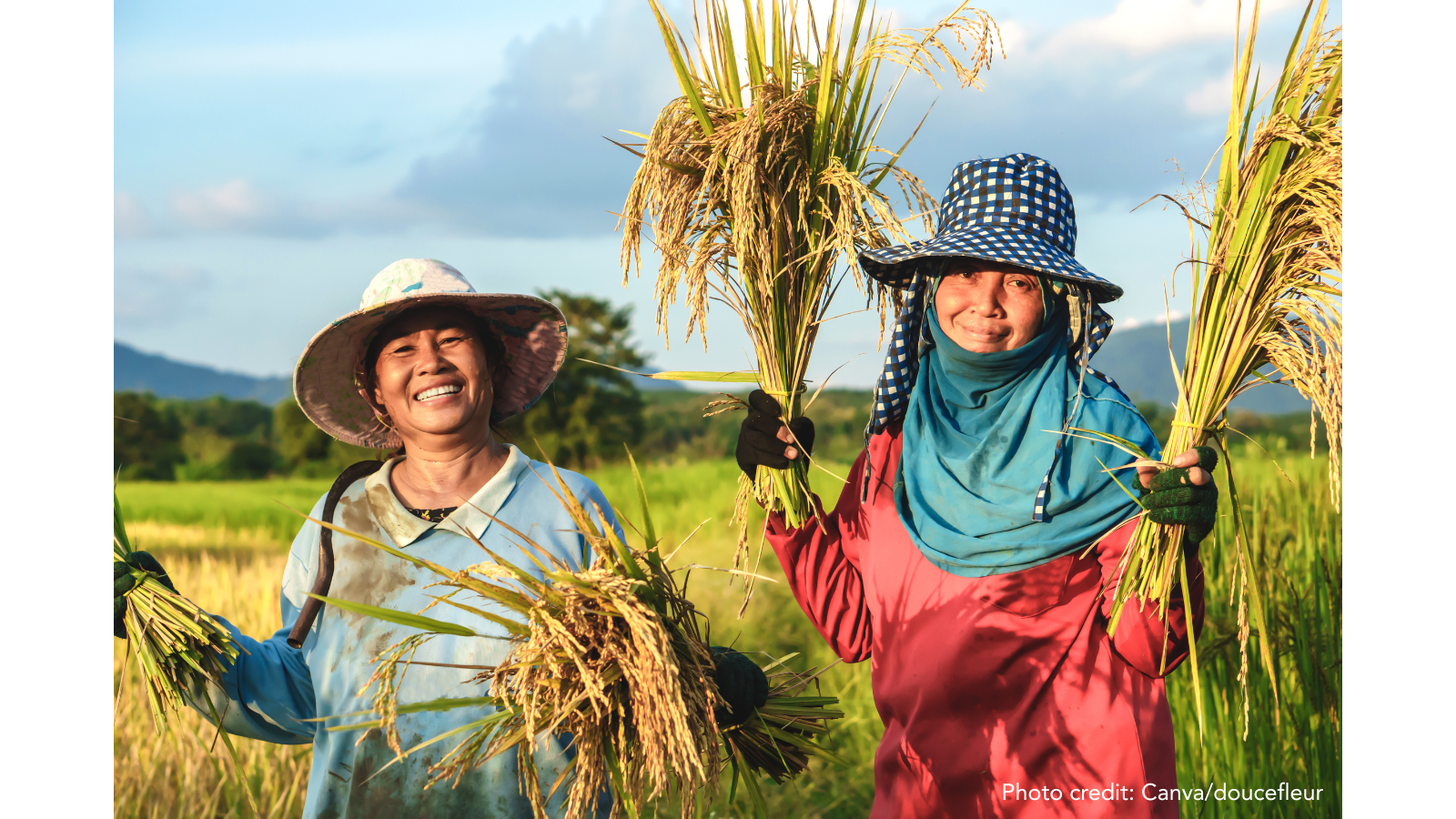
Despite their central role in food production, women farmers face significant gender-based disparities that run the gamut from unequal access to land and resources to financial inequality and time poverty due to homemaking responsibilities.
The 27-country World Bank-led Food Systems, Land Use and Restoration Impact Program (FOLUR) is responding to these challenges by embedding gender-responsive activities such as targeted trainings, inclusive and empowering community engagement processes, women's leadership programs, and strategic gender alliances and champions into country projects.
From the outset, project teams were encouraged to hire gender experts and social specialists to design and implement gender-responsive project activities and indicators for measuring and monitoring related outcomes.
Some four years later, many project teams not only have a gender specialist, but they are able to report on gender-related outcomes, indicating an encouraging shift in both attitudes and the uptake of concrete approaches to more inclusive and sustainable food systems. These shifts were revealed during three regional online sessions set up for gender leads in country projects to exchange gender-responsive activities, providing a platform to discuss related issues they were experiencing and wanted to discuss further. Participants demonstrated a strong interest in strengthening collaboration within and across regions. While identifying further opportunities, they shared gender-related results and stories from across FOLUR and the wider GEF community:
LATIN AMERICA
In Mexico, where livestock and coffee are the focus, the FOLUR team has developed local training sessions tailored to women’s needs, for different seeds, animal breeds or labor-saving practices, for example. An integrated family-based approach to inclusive knowledge sharing regarding more diversified, sustainable production systems is increasing women’s participation by exploring how all family members can learn and benefit from diverse project activities. On hearing about this experience in Mexico, participants from other countries expressed a strong interest in learning more about this family-based approach. The Mexico project also shared that it is addressing some strong gender barriers in the livestock sector through the inclusion of technical training sessions targeted to women in areas project beneficiaries expressed a need for more knowledge in, such as financial management, feed management and agroforestry opportunities.
In Paraguay, where soy and livestock are the focus, the FOLUR team is working toward more environmentally sustainable soy and livestock landscapes. They are tapping into partnerships with organizations at local, national and international levels. Their gender strategy includes investments aimed at strengthening local women producer’s associations and partnering with the International Conservation Corps which supports more inclusive environmental governance approaches.
In Peru, where coffee and cocoa systems are the focus, the FOLUR team is implementing a leadership and empowerment program for women producers. This includes strengthening women’s committees in agricultural cooperatives to ensure participation in decision-making and dedicated funds for gender-targeted activities.
AFRICA
In Kenya, FOLUR’s gender project intentionally integrates women, youth, and people with disabilities across all coffee and maize production activities, in line with Kenya’s constitution that mandates no more than two-thirds of members in elective or appointive bodies should be of the same gender. The FOLUR team’s efforts are aimed at widening awareness and strengthening capacity of both women's and mixed groups to adopt improved practices that benefit and empower all.
In Madagascar, the FOLUR team is influencing national gender policy on coffee production through collaborative work within agricultural and environmental ministries. They too are supporting women’s associations and local initiatives that diversify and generate income for women from “green” products.
In Nigeria, where cocoa landscapes are the project focus, FOLUR project community facilitators are working at the village level, ensuring trust, local-language communication, and meaningful engagement with women’s groups, which now have self-elected leadership and meet regularly. Women receive training in leadership and business management, while private-sector specialists work with them to help make connections with finance and income-generating opportunities.
In Uganda, gender is being mainstreamed by the FOLUR team in the coffee value chain by working with private-sector actors and the Kalamogosi Women's Empowerment group to address restrictive norms and expand women’s participation. A “four-leg table” sustainability model—including economic, environmental, governance, and social 'legs'—is used to engage women, youth, and casual laborers in trainings and promote more equitable household benefit-sharing.
ASIA
In China, FOLUR projects on wheat, rice, maize and livestock are focusing on building strong gender capacity across all government levels from national to local, and positioning women as trainers, coordinators, and project leaders. Surveys and consultations with women’s groups have guided project design to ensure women benefit from agricultural value-chain transformations. Community activities, including online, increase women’s visibility and participation, strengthening their role in sustainable food production.
In Malaysia, the FOLUR team in the province of Sabah is building gender and community mobilization structures and supporting local gender focal points and mobilizers – an approach also taken by FOLUR-Indonesia. The Malaysia project team is also adopting tested strategies from FOLUR-China and Thailand to shape its gender mainstreaming and engagement approach.
In Thailand FOLUR is tackling challenges across rice landscapes, while promoting gender-inclusive crop diversification recognizing women’s preferences, forest management, and sustainable farming across several provinces. Women’s groups supported by the Department of Agricultural Extension are strengthening, and being strengthened by, grassroots economic participation and local leadership. Innovative communication and training tactics in local languages, flexible timing, community-level outreach are underway to improve women’s access in male-dominated contexts.
We look forward to continuing the dialogue across FOLUR country project teams and sharing approaches, resources and ideas that can take gender equality to the next level. Only when women are included in this transition can we truly transform the way we produce and consume food across production landscapes.
__________________________
We are grateful to Sandra Andraka, Alejandra García-Castellón and Agustela Nini-Pavli with the United Nations Development Programme (UNDP) Food and Agricultural Commodity Systems (FACS) Community for their support and to all the project team members who shared their stories.
[Published Dec. 12, 2025]