_______________________________
By Julie Mollins
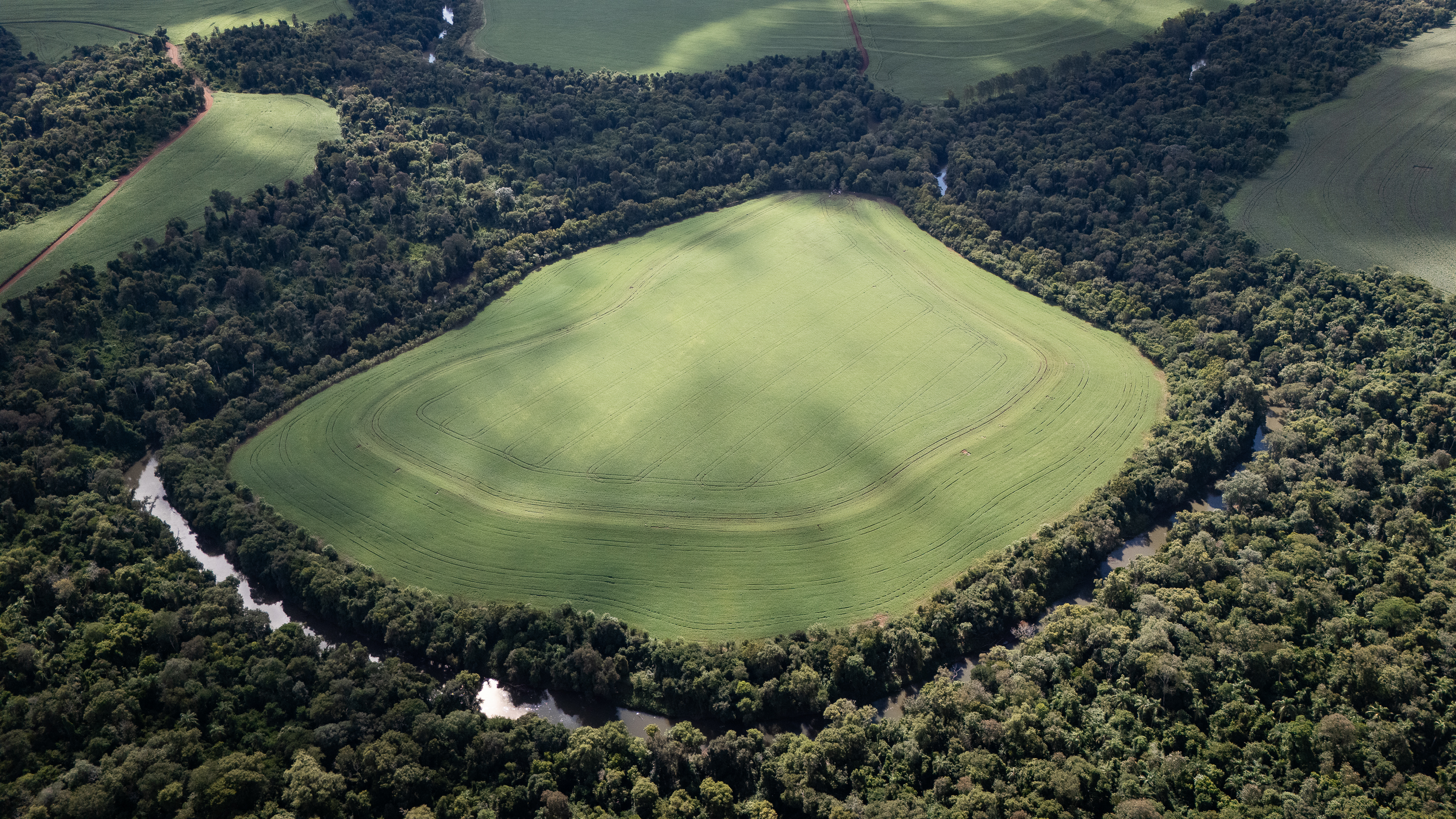
Paraguay is a major producer of commodities, particularly soybean and beef.
The country plays an important role in the global soybean market, ranking as the world's sixth largest producer and the third largest exporter in 2024-2025. Paraguay is the eighth largest exporter of beef in the world.
Estimates indicate that the country’s soybean sector provides jobs for around 40,000 people, while the livestock sector provides jobs for more than 358,000.
The country seeks to increase the efficiency and environmental sustainability of soybean and beef production by managing natural resources, reducing the loss of natural heritage and biodiversity, and promoting the protection and restoration of ecosystems.
The 27-country, World Bank-led Food Systems, Land Use and Restoration Impact Program (FOLUR) funded by the Global Environment Facility (GEF), is working alongside the Paraguayan government and partners in support of sustainable food value chains.
Four initiatives are beginning to show positive results in the Chaco and Upper Paraná Atlantic Forest (BAAPA) region, where the project is under implementation.
Rotational grazing
Through the Plan for Regenerative Rational Rotational Grazing (PRIR) in the town of Agua Dulce in Alto Paraguay, livestock are moved systematically between different pastures, a sustainable land management practice that allows each area to rest and recover leading to improved soil health, enhanced biodiversity and improved forage quality.
By partnering with the Asociacion Agropecuaria de Agua Dulce, (APAD) a group of producers in the region, these efforts are now underway on three ranches encompassing 5,000 hectares – equal in size to about 12,500 football fields.
The introduction of the new grazing system focusing on sustainable and efficient production is having an impact. Cattle are healthier, gaining as much as 450 kilograms weight per hectare a year, compared to just 150 to 180 kilograms per hectare a year previously. The stocking rate – reflecting the number and weight of animals on a set area of land over a specific period – is now an average of 1.06 animal units (AU) per hectare, up from an average of 0.2, which is typical of conventional grazing systems in the area.
Forage feed pellets
Across a region spanning more than 7,500 hectares in Macharety, women from the Macharety Indigenous community are learning how to transform compressed leaves from forage shrubs into high density feed pellets. Through the FOLUR project, women are using forage-processing equipment and participating in training sessions on harvesting and pelleting techniques. They are also active in assisted natural regeneration practices, which involve pruning vegetation to encourage quick and healthy regrowth.
Freshwater springs
In the BAAPA region, a freshwater spring restoration initiative is underway as part of an effort to restore and strengthen environmental resilience in the area. Four springs are now restored in the Naranjal District by FOLUR, the Municipality of Naranjal and the farmer-led Naranjal Agricultural Production Cooperative Ltd. (COPRONAR), created in 1992 to improve sustainable agriculture practices, implement new techniques and crops, acquire supplies and market products.
The work under the FOLUR Project is part of a broader joint program led by the Municipality of Naranjal and COPRONAR, which has so far restored 160 springs.
Spring restoration contributes to the health of the forest, reducing soil erosion, securing water resources and improved water quality. It also helps stabilize local ecosystems, building resilience to drought and extreme weather events creating a bulwark against erratic climate shifts.
Honey production
FOLUR is implementing a new honey production initiative that promotes environmentally sustainable practices to support the livelihoods of 85 families Puerto Barra Aché Indigenous Community of Naranjal District in BAAPA.
The beekeeping project enhances economic diversification with 29 beehives on 3 kilometers of land specifically dedicated to apiculture. Renewed activity also supports land restoration, aids in forest restoration, and degraded agricultural areas.
Participants received technical support and beehive boxes, which were critical contributors enabling the community to achieve meaningful results within a short period.
New beehives produced 350 liters of honey in three months. Projections indicate production capacity will be three harvests each year, positioning apiculture as a reliable source of income, as well as a replicable model for other Indigenous communities seeking to diversify livelihoods while conserving ecosystems.
The techniques developed are transferable to other communities.
The FOLUR Project in Paraguay showcases how working with producer associations, Indigenous Peoples and women can change and improve agricultural practices, leading to environmental benefits even within a few years.
Across livestock, freshwater springs and bees, these practices illustrate a powerful commitment to strengthen food systems that balance productivity with conservation—building resilience for people and nature across Paraguay’s unique ecosystems.
[Published Jan. 6, 2026]