Project Overview
Nigeria hosts some of the world’s most ecologically diverse landscapes and is one of the leading global producers of cocoa and palm oil. However, commodity-driven expansion has contributed to deforestation, land degradation, biodiversity loss, and declining ecosystem services.
The FOLUR Nigeria Project addresses these challenges by promoting integrated landscape management, restoring degraded ecosystems, and transforming commodity value chains toward sustainability. The project aligns with Nigeria’s commitment to restore 4 million hectares of degraded land while advancing climate-smart agriculture and deforestation-free production systems.
Commodities:
Palm oil, cocoa
Area Covered:
795,000 hectares
Executing Partner and GEF Implementing Agency:
Food and Agriculture Organization of the United Nations

Project features and Progress
Integrated Landscape Management
In collaboration with the Participatory Informed Landscape Approach (PILA), the project has established functional multi-stakeholder governance platforms and strengthened Integrated Landscape Management capacities.
In collaboration with PILA the project has explored GIS systems and geospatial tools to support the development of Integrated Landscape Use Plans (ILUPs) in Cross River State and Ondo State. Efforts are also underway to enable customary land tenure recognition for smallholder farmers.
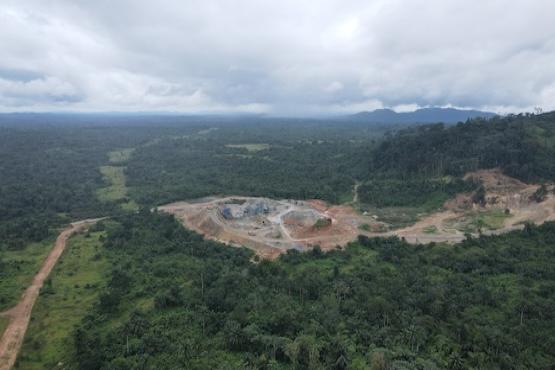
Aerial view of degraded areas from industrial activities in Akampa Buffer Zones, Cross River State under restoration by the project. Photo credit: FOLUR Nigeria
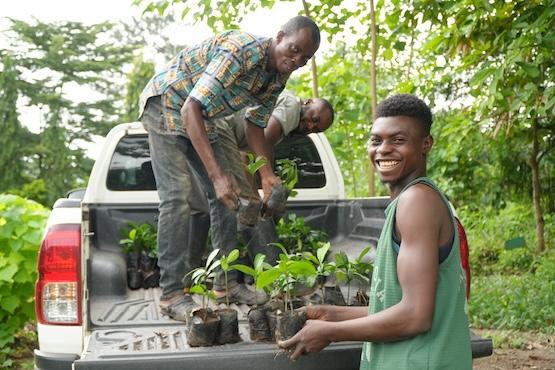
Distribution of seedlings to farmer groups in Irile Communities. Photo credit: Excel Ogisi/FOLUR Nigeria
Ecosystem Restoration
Restoration of degraded forest landscapes is being scaled through community-driven Assisted Natural Regeneration (ANR), including the distribution of economic tree seedlings to smallholders, promoting agroforestry, biodiversity recovery, and improved livelihoods.
Capacity Building
Farmers are trained in climate-smart practices across cocoa and oil palm systems, improving productivity, soil health, and resilience while reducing pressure on forests.
Inclusion and Gender
The project maintains 40 percent women’s participation across farmer and community engagements, strengthening inclusive economic opportunities.
Sustainable Finance
Linkages with financial institutions are improving access to credit for smallholders, alongside ongoing efforts to advance a deforestation-free finance framework.
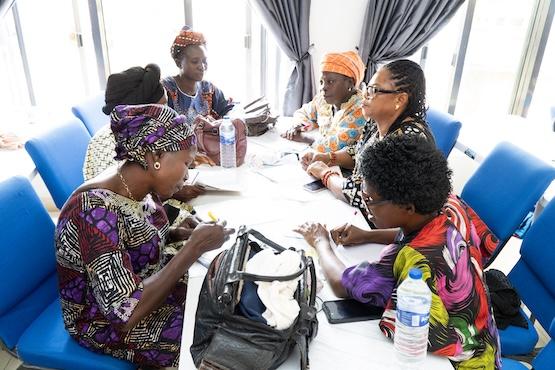
Women leadership training workshop. Photo credit: Excel Ogisi/ FOLUR Nigeria
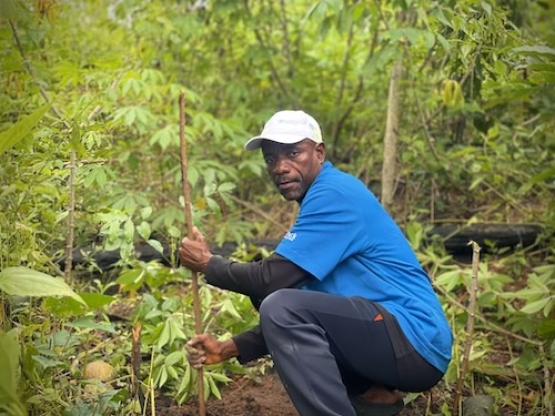
Tree seedling planting at the Akamkpa restoration sites, Cross River. Photo: Samuel Tom/FOLUR Nigeria
Sustainable Value Chains
Partnerships with the Roundtable on Sustainable Palm Oil and the Rainforest Alliance support certification, traceability, and verified sourcing, enhancing access to premium national and international markets.
Policy and Partnerships
The project strengthens institutional capacity and policy frameworks for sustainable land use, while leveraging public-private partnerships and contributing knowledge and best practices to the global FOLUR platform.
Through its integrated approach, the FOLUR Nigeria Project is demonstrating how sustainable commodity production, ecosystem restoration, and inclusive rural development can be achieved at scale.
By strengthening governance systems, empowering smallholder farmers, and unlocking sustainable finance and markets, the project is laying a strong foundation for long-term environmental sustainability and resilient livelihoods across Nigeria’s priority landscapes.
[Page updated May 2026]
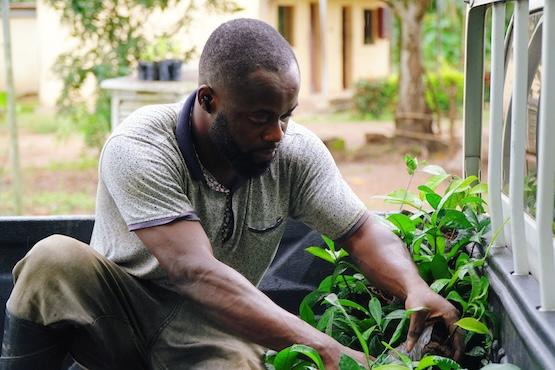
Loading tree seedlings into a truck to be transported to nearby communities. Photo credit: FOLUR Nigeria