Project Overview
Paraguay is one of the world's leading producers of soybeans and beef. These products account for 65 percent of the country's exports and 25 percent of its gross domestic product. Unfortunately, the increased production of these products in recent decades has led to a reduction in forest cover and biodiversity due to the need to expand the cultivation of these commodities.
The historical expansion of the agricultural frontier, including soybean production, has contributed to land-use change in the Upper Paraná Atlantic Forest (BAAPA), recognized as a biodiversity hotspot. In this context, the Zero Deforestation Law (Law No. 2524/2004) is in effect in the Eastern Region of the country. This measure was adopted to prevent land-use change and curb the deforestation of native forests in this area, which is home to BAAPA. Currently, producers are increasingly working with sustainable production approaches, incorporating practices aimed at improving productive efficiency and reducing environmental impact.
Livestock activities are concentrated in the Chaco region, where deforestation rates have increased considerably, reaching 255,000 hectares per year. Livestock farming in the Chaco represents the engine of progress for a vast region full of opportunities. Today, the commitment of agricultural producers is geared towards a dynamic balance: producing high-quality food while safeguarding ecosystem services. This new paradigm makes the Chaco a fertile territory for investments that value sustainability as the main asset of production. Modern agriculture.
The Government of Paraguay, through the Ministry of Environment and Sustainable Development (MADES), seeks to improve and implement efficient and environmentally sustainable practices in soybean and beef value chains.
Sites:
Districts of Mariscal Estigarribia, Filadelfia, Boquerón, Loma Plata, Fuerte Olimpo, and Bahía Negra in the Chaco region, and the districts of Naranjal, San Cristóbal, Tavaí, and Abaí in the BAAPA (Upper Paraná Atlantic Forest) region.
Commodities:
Beef, soybeans
Area Covered:
160,000 hectares
Executing Partner and GEF Implementing Agency:
United Nations Environment Programme

Project Features
The FOLUR Project, led in Paraguay by the Ministry of the Environment and Sustainable Development (MADES), aims to strengthen food production processes and land use so that productive areas are better integrated, generating ecosystem services and conserving resources and natural capital.
Its objectives include the creation of an integrated landscape management system and the development of gender-sensitive capacity-building programs aimed at improving governance and technical expertise.
It also promotes the implementation of a MADES resolution for the effective operation of national multi-stakeholder dialogue platforms, which incorporates gender considerations to strengthen value chains and sustainable production systems. Additionally, it promotes the implementation of a recognition system for sustainable production through the development of the National Standard for Sustainable Meat Production, aimed at generating added value for production and facilitating access to national and international certifications.
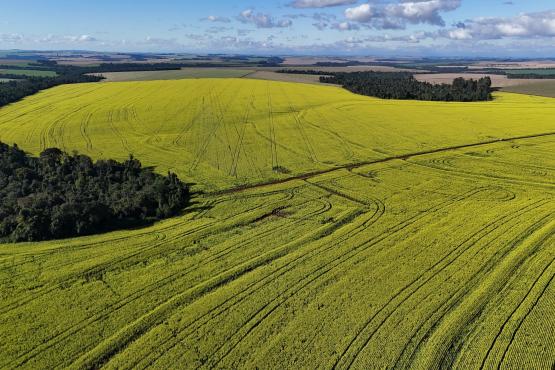
Productive landscape in the Upper Paraná Atlantic Forest (BAAPA) ecoregion. The adoption of good agricultural practices and the preservation of protective forests demonstrate that it is possible to maintain high productivity. Photo credit: Cooperativa de Producción Agropecuaria de Naranjal (COPRONAR)
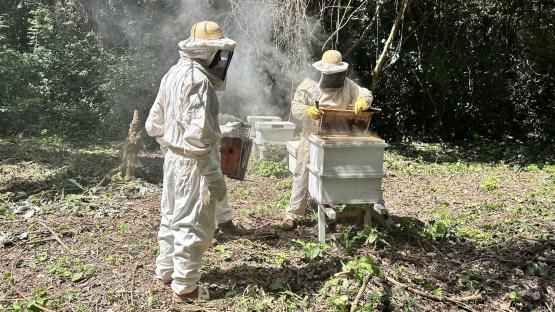
Indigenous communities of the Chaco and the BAAPA are strengthening the sustainable management of their lands through the FOLUR Paraguay project. These actions are fundamental to ensuring biodiversity conservation, food security, and resilience. Photo credit: Ricardo Ulke/FOLUR Paraguay
The Project develops training programs for producers, with a gender focus, on integrated landscape management systems, designed to strengthen local actors—both public and private—technically and socially so they can design, implement, and monitor integrated land-use plans.
About 40% of the project’s direct beneficiaries are women.
The project also includes support for the development and implementation of Urban and Territorial Planning Plans (POUT) in the departments of Boquerón, Alto Paraguay, Caazapá, and Alto Paraná, contributing to more efficient and sustainable territorial management in the municipalities, including the implementation of an integrated Environmental Information System (SIAM) for sustainable land-use management, linking the municipalities to this platform, managed by the Ministry of Environment and Sustainable Development (MADES).
Within this framework, the institutional capacities of the ministry, municipalities, and local stakeholders are strengthened for the management and use of environmental information systems geared toward decision-making.
Support is also provided to producers in the intervention areas for the implementation of Good Agricultural Practices (GAP) and Good Livestock Practices (GLP), contributing to increased sustainability, competitiveness, and resilience of production systems.
Also, the FOLUR Project promotes connectivity between blocks of remaining forests through the restoration of watershed protection forests and the strengthening of private reserves.
[Page updated June 2026]
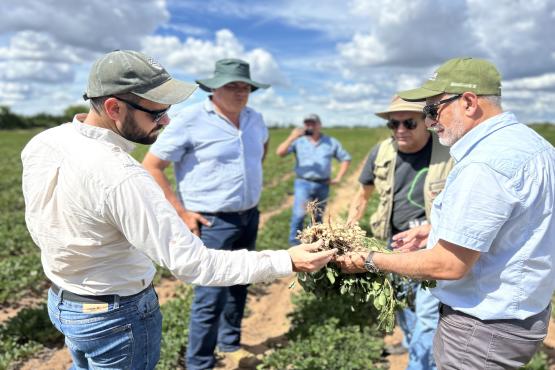
Staff at a cattle ranch in the Chaco region implement preventive management measures to mitigate conflict between livestock and large felines. Through monitoring, the use of technology, and the adoption of good anti-predator management practices, it is demonstrated that it is possible to protect livestock productivity and safeguard wildlife. Photo credit: Ricardo Ulke/FOLUR Paraguay