_____________________
By Julie Mollins
- Farmers are finding renewed hope and improved income by adopting rehabilitation and sustainable farming practices supported by strong multi-sectoral collaboration with various institutions working together through integrated natural resource management.
- Through Village Savings and Loan Associations, women have gained financial independence, better land access, and new leadership roles—shifting local norms and supporting families and communities.
- Former grasslands and degraded riverbanks and watersheds, where revegetation efforts are also ongoing, are seeing reduced erosion and better ecological balance.
A formerly lush, forested region in Ghana is undergoing a dramatic transformation as vast swathes of land fragmented into farms, grasslands, and degraded areas caused by unsustainable agricultural practices and long-ago bush fires are restored.
Farmers and other stakeholders in Ghana are working with the World Bank-led Food Systems, Land Use and Restoration Impact Program (FOLUR), funded by the Global Environment Facility (GEF) and other donors, to restore tree cover, create agroforestry systems and encourage biodiversity along rivers and in newly created Community Resource Management Areas (CREMAs) within Wildlife Biological Corridors.
Previously, smallholder cocoa farmers in Ghana faced significant challenges in part due to very old and unproductive cocoa trees on moribund cocoa farms. Many sold their land or farm to small-scale miners, a short-term financial fix, which only led to more land degradation and deepened poverty, but this trend is changing due to the rehabilitation of these moribund farms.
Other limitations were related to traditional land tenure and economic systems. Historically women have had less access to fertile land, lower incomes, and fewer leadership roles. They were often reliant on men for land allocation and had fewer channels for savings, credit, or entrepreneurial opportunity.
Innovations for change
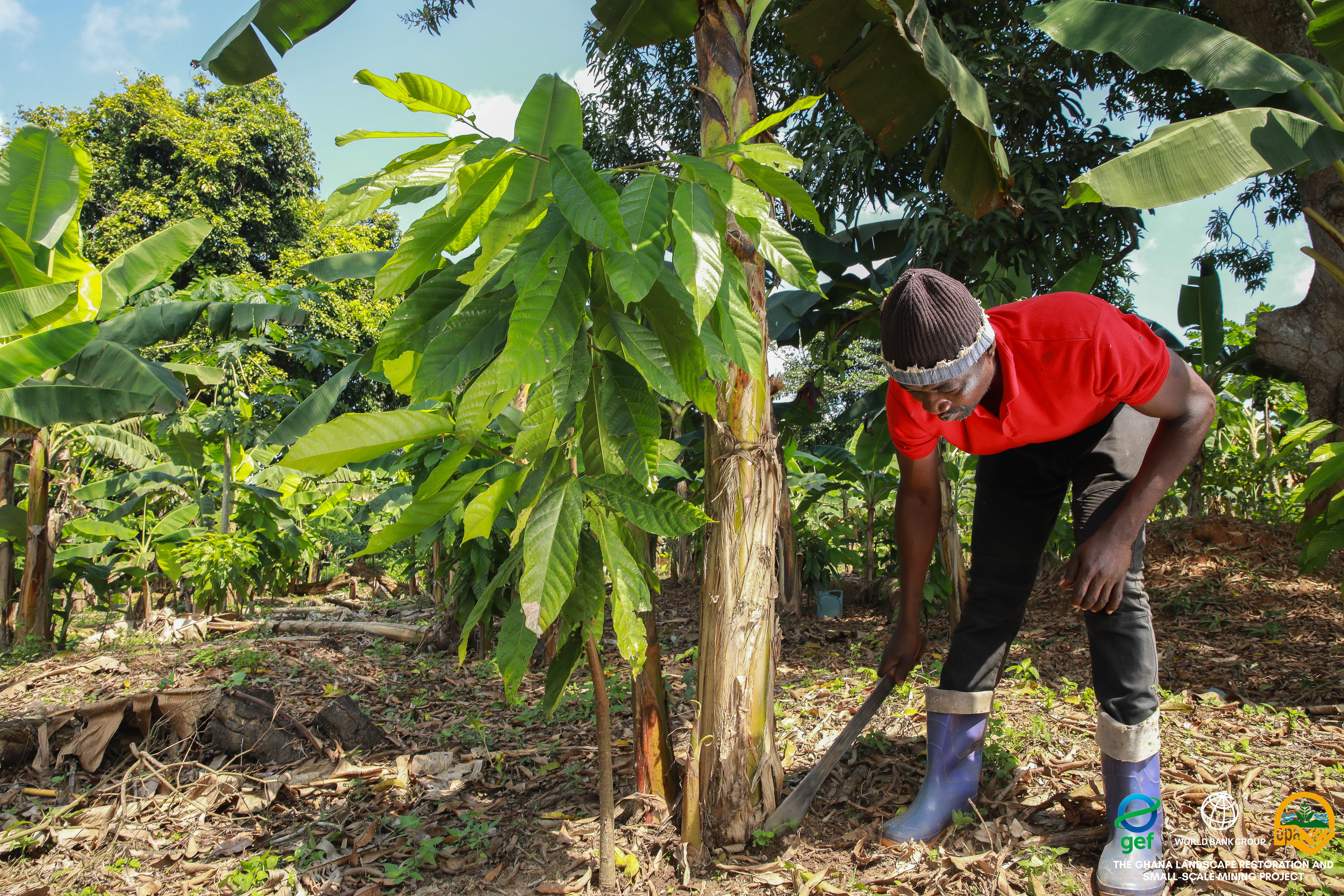
Significant changes began with the FOLUR project team, led by Ghana’s Environmental Protection Authority (EPA) and in partnership with community leaders and the Ghana Cocoa Board (Cocobod), with the introduction of improved planting materials, technical advice on rehabilitation and intercropping, and climate-smart, sustainable agricultural practices.
This integrated approach brings together environmental conservation, agriculture, forestry, and local communities to manage resources collectively.
On farm restoration activities include replanting locally appropriate, high-yielding cash crop cocoa, cashew and mango tree varieties, intercropping trees as shade plants, and integrating maize, rice, legumes, plantain, cocoyam and vegetables.
These innovations provide farmers with short-term income and food security while the cocoa matures.
The FOLUR project also encourages farmers to use sustainable techniques, which include retaining tree cover, planting shade trees and indigenous species, practising soil conservation techniques, and refraining from burning usually used in land preparation before cultivation.
“These achievements advance the goals of environmental restoration, improved local livelihoods, gender equity, and landscape-level resilience,” said Isaac Charles Acquah Jnr., Ghana Landscape Restoration Project Coordinator. “Formerly, on most of the farmlands, there were no trees because the farmers plough, and they see the trees as hindrance, but through awareness raising and education, they have learned the importance of having tree cover on farmlands.”
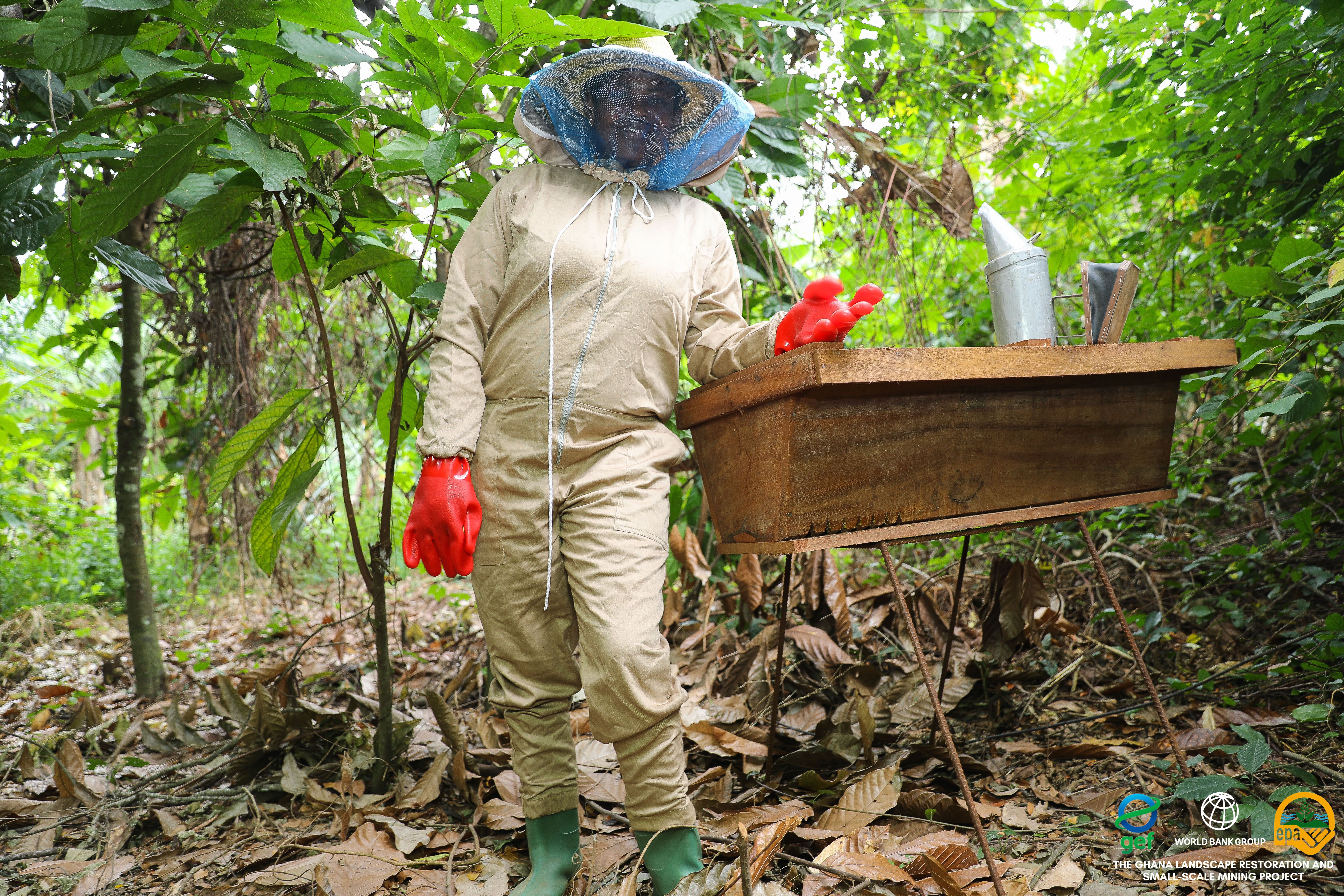
Farmers who engage in the project and neighboring farmers who adopted the same techniques see greater, more sustainable incomes. Crops complemented by the introduction of aquaculture – tank and cage culture of catfish and tilapia – poultry and small ruminant rearing as additional livelihoods offer steady financial stability.
Removing structural barriers
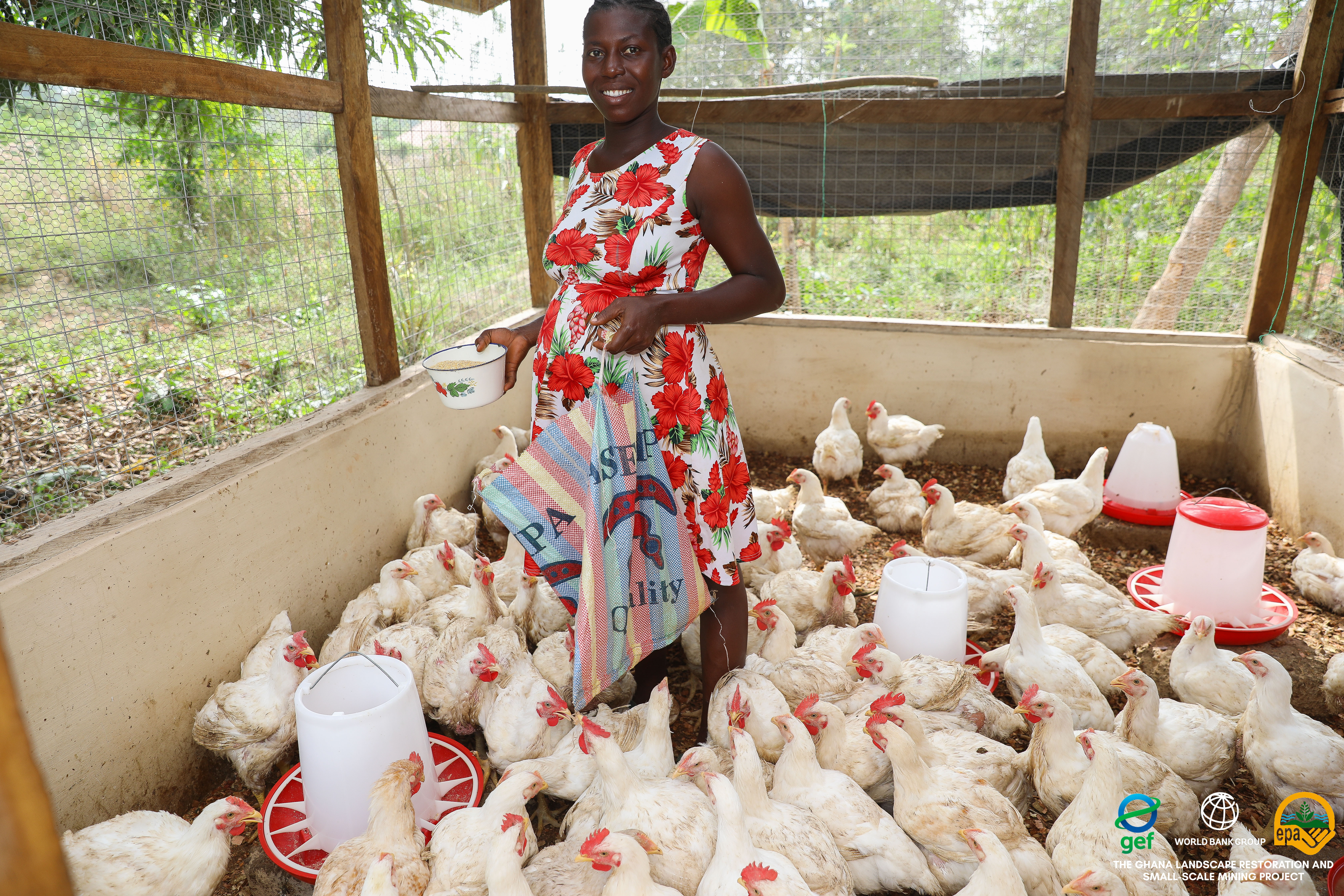
Through newly introduced Village Savings and Loan Associations (VSLA), many women have reinvested their gains from restoration efforts into their families, children’s education, and some have expanded their own farms.
Some men—seeing the economic gains women made through project-supported groups—are more willing to give prime land to women for cultivating, Acquah Jnr. said.
“Now that the men saw that the women got income through the VSLA, they prefer giving them fertile lands because they are also contributing to the family food basket and family food security,” he added.
The project aims for at least 40 percent female participation in community committees and direct project beneficiaries, with some reaching 50 percent. Alternative livelihoods are designed to be gender-responsive, including processing facilities for crops such as groundnuts, oil palm, and shea.
“Instead of selling the raw product, women can now add value to it, so they are able to get more income and improve their livelihoods and also support the family by paying school fees and hospital bills, for example,” said Ivy T. Lomotey, a member of the FOLUR Project Team who works with Ghana’s EPA.
Restoring water systems
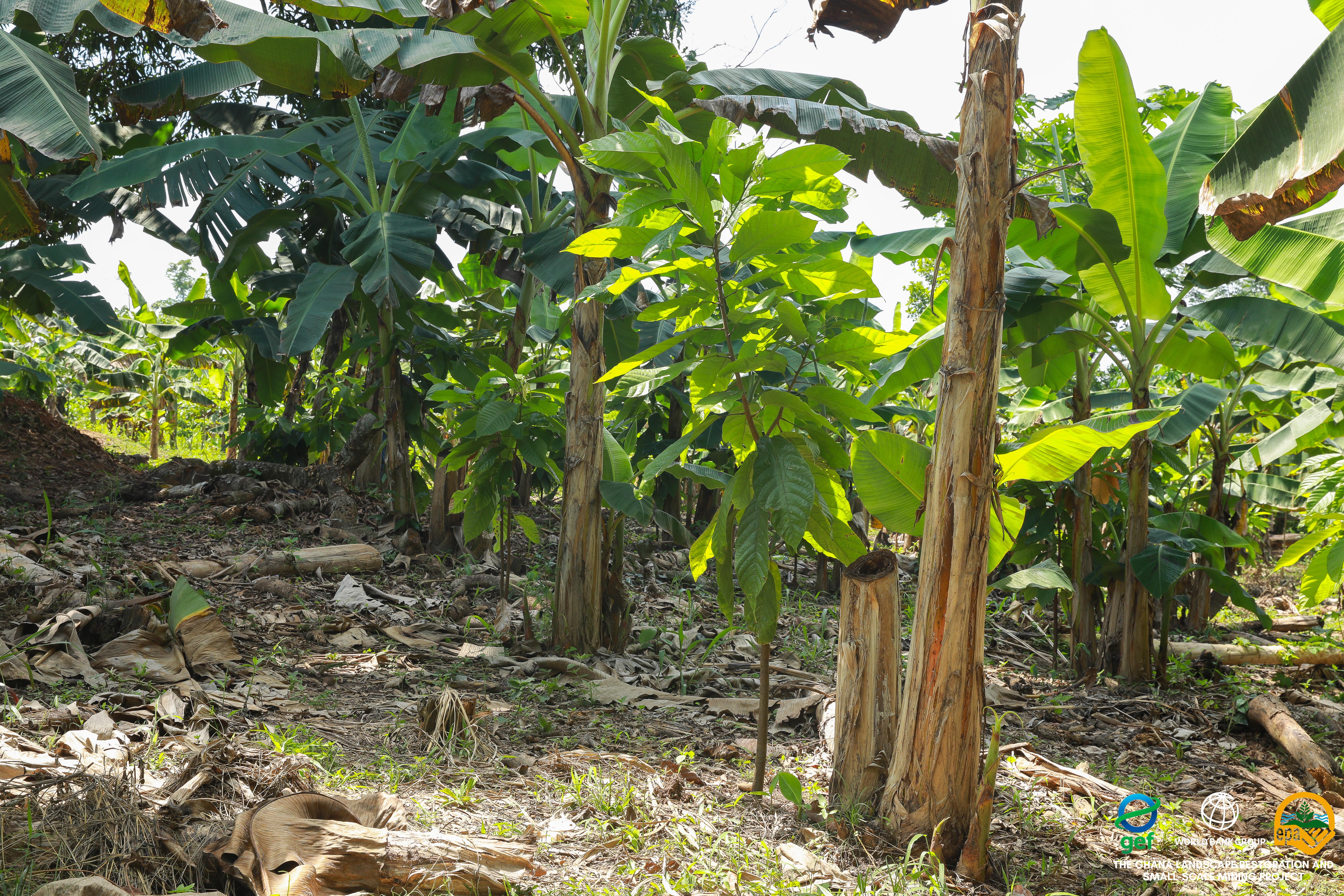
Former grasslands and degraded riverbanks and watersheds, where revegetation efforts are also ongoing, are seeing reduced erosion and better ecological balance.
“Along the riverbanks where the riparian vegetation was destroyed and water run-off is an issue, we also restore to reduce siltation that prevents frequent flash floods,” Lomotey said, explaining that bamboo plays a critical role by reducing siltation and improving water quality.
“In areas where we've established bamboo along rivers, stabilization of riverbanks is improving due to its dense, strong root system, which holds soil in place and reduces erosion,” added Anthony Appianti, the Project Focal Point for the EPA on the Landscape Restoration Component of the FOLUR project.
Fast growing bamboo also provides wildlife habitats and supports biodiversity.
These achievements collectively advance the goals of environmental restoration, improved local livelihoods, gender equity, and landscape-level resilience. They showcase that taking an integrated approach to landscape management has an exponential effect, leading to significant landscape-scale transformation driven by local adoption.
[published Jan. 28, 2026]